Dubai Visa Rejection Reasons in 2026: Main Causes and How to Avoid Refusal
Many foreigners who apply for a UAE residence visa are rejected for various reasons and, as a result, find themselves in extremely unpleasant situations. Understanding the most common reasons Dubai visa applications are rejected can significantly improve your chances of success on the first attempt and help you avoid costly, unnecessary delays during relocation. Most applicants don’t know it, but even minor errors or inconsistencies can lead to application rejection, either during automated verification or during subsequent verification. This article covers the most common reasons for visa refusals, including security-related grounds, and offers possible solutions to help avoid UAE visa denials in 2026. Here, you will learn what to correct when submitting your next application and when to contact professionals and visa services to increase your chances of approval.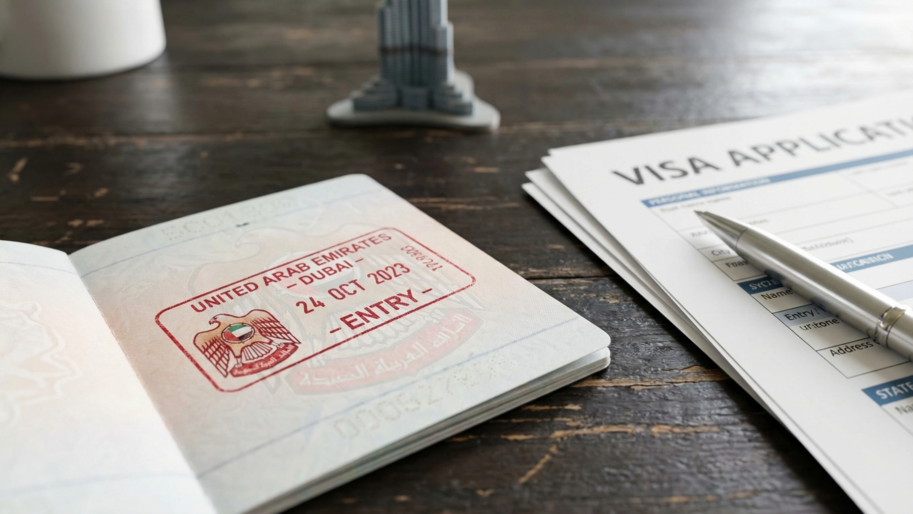
Why Dubai Visas Get Rejected: Understanding the Process
Before discussing the top reasons for Dubai visa rejection, let us first understand how the UAE immigration screening process is conducted. All applications undergo an automated pre-screening process and may also be further reviewed by an authorized immigration officer. Even a minor discrepancy, missing information, or a compliance issue can result in your application being denied. Without further ado, here are the most common reasons for Dubai visa rejection (top categories).
Top Reasons for Dubai Visa Rejection – Summary
Here is a collection of Dubai visa rejection reasons, all categories:
| No. | Category | Typical Causes |
|---|---|---|
| 1 | Incomplete documents | missing or incorrect data, or poor scans |
| 2 | Wrong information | Typos, incorrect details, misinformation |
| 3 | Security concerns | Criminal history, flagged records |
| 4 | Immigration violations | Overstay, absconding, prior bans |
| 5 | Intent concerns | Doubtful purpose for travel, lack of funds |
| 6 | Sponsor-related issues | Weak profile, expired residency |
| 7 | Medical issues | Failed health screening, missing insurance |
| 8 | Countries with Statistically Higher Visa Rejection Rates | Country of origin from a high-risk country |
Now, let us consider each of these in detail.
Incomplete, Incorrect, or Inconsistent Application Documents
Incomplete documentation is a common reason for Dubai visa rejection. Typical document issues that cause visa refusal are:
- Incomplete required documents;
- Passport number miskeyed or spelling of name different;
- Mismatched personal information across forms;
- Blurry or low-quality passport photos;
- Passport (must have at least 6 months before expiration);
- Unreadable scanned copies.
The UAE immigration service cross-references all the provided data. Even a minor discrepancy, such as a name spelled differently on your passport and bank statement, can trigger an automatic rejection. For document-related reasons, note that incorrect information or data also constitutes non-compliance.
Wrong or Misleading Information
One of the main reasons for Dubai visa rejection is wrong information (either intentional or unintentional). The most frequent inaccuracies leading to rejection are:
- Wrong date of birth;
- Incorrect passport number;
- Providing outdated employment information;
- Inaccuracies concerning marital status or nationality;
- Incorrect purpose of travel.
Even a small mistake may be misconstrued as a breach of legal or regulatory requirements, which in turn may result in a refusal of a Dubai visa.
Previous Criminal Record or Security Concerns
Local authorities place strong emphasis on security in the UAE. Several candidates have had their Dubai visa applications rejected for security reasons, with no specific details on the exact reason. Here are the key security-related factors:
- Criminal record in the home country;
- Matches with international or regional security databases (including Interpol and Gulf Cooperation Council countries);
- Previous immigration violations;
- Suspicious travel history.
Here’s a frequently asked question: “If a Dubai visa is rejected due to security reasons, can I reapply?” The response is “Yes,” but only after overcoming the obstacle, which usually requires supporting documents issued by one or more competent authorities.
Past UAE Immigration Violations
A history of immigration matters more than most applicants realize. Here are the common violation-based reasons:
- Overstaying a previous UAE visa;
- Leaving the country with an outstanding overstay penalty;
- Multiple previous visa rejections;
- Complaints lodged by a former employer in the UAE.
This often results in a rejected visa application in Dubai and, in some cases, an entry ban.
Strong Likelihood of Long-Term Stay Without Authorization
Immigration officers assess whether a traveler may be in breach of the UAE stay rules. The red flags that fall under this category are:
- No clear travel purpose;
- No hotel booking or host information;
- Insufficient financial documentation;
- Frequent long trips without justification.
Most often, this also occurs when a Dubai tourist visa or a Dubai visit visa is rejected.
Sponsor-Related Issues
Many applicants overlook the importance of the sponsor’s profile. If the sponsor's status or documents do not meet the established requirements, the dependent's application may be denied. Sponsor-related rejection causes are:
- The sponsor's income is below the minimum level established for the relevant sponsorship category;
- The sponsor's UAE residency has expired.
- The sponsor has any pending court or immigration cases;
- Company-sponsored invitations from unlicensed entities.
Most of these cases come under Dubai visit visa rejection reasons or Dubai tourist visa rejection reasons, based on the type.
Medical & Health-Related Reasons
Although less common in tourist and visit visas, health-related reasons may be a key factor influencing issuance. Criteria for rejection on health grounds are:
- Diseases included in the list of medical contraindications established by the UAE Ministry of Health and Prevention (MOHAP);
- Lack of valid medical insurance coverage, which is mandatory for the relevant visa type;
- Medical report (in case of long stay visas).
This makes it necessary to sort out health issues (if possible) before you apply for a visa.
High Dubai Visa Rejection Rate Countries
In some cases, visa refusal rates for Dubai may be higher for applicants from certain countries. Risk factors in that case include:
- High rate of immigration violations;
- Insufficient documents proving financial stability;
- Incomplete identity verification systems.
This does not mean refusals are inevitable; it simply means documents must be more accurate.
Your Dubai Visa Application Has Been Rejected: What to Do Next?
If your Dubai visit visa was rejected, here are a few steps you can take to improve your chances next time. Here are some items that will need to be reviewed before reapplying: the accuracy of sponsor documents, passport validity, previous travel history, and the accuracy of personal data. Understanding the actual causes of Dubai visa rejections may help you address the issue and improve your chances, even if you've been rejected before.
How to Avoid Dubai Visa Rejection (Practical Guide)
Now, let us consider how you can avoid Dubai visa rejection and organize your application correctly. Here are some proven steps to increase your approval chances:
- Check the spelling and data in all documents for consistency.
- The passport must be valid for at least six months.
- Provide clear, high-resolution scans.
- Include proof of financial capability.
- Confirm sponsor eligibility before applying.
- Be honest about any previous visa refusals.
- Don’t submit multiple applications within the same period. Adhering to them significantly reduces the incidence of Dubai visa rejection.
Following these guidelines will reduce the likelihood of refusal, but it does not guarantee automatic approval of your application, as the final decision rests with the UAE immigration authorities.
Dubai Visa Rejected for Security Reasons: How to Reapply?
Security-related denials are some of the most sensitive. Reapplying is an option, but once you are sure of the following:
- No pending criminal problems;
- Identity not mismatched;
- No objections from the local authorities.
In such cases, detailed professional consultation is mandatory. Many applicants seek assistance after receiving a rejection letter for a Dubai visa. A specialist can assist with reviewing documents, identifying issues, and drafting a compliant application. If you’re seeking professional help to guide you through the UAE immigration process, consider Atton Accounting & Consulting's visa services, whose expert advisers can assist with both individual and business visas at every stage.
FAQ: Dubai Visa Rejection
Why do local authorities reject Dubai visa applications?
The vast majority of Dubai visa denials result from typographical errors, missing documents, or incorrect personal information that does not match the details on the application form. Immigration officials also consider an applicant’s travel history, compliance with previous UAE visa requirements, and any security indicators. Even minor discrepancies – such as mismatched passport numbers or poorly scanned documents – can result in an automatic refusal. In addition, past overstays, outstanding fines, or other immigration violations in the UAE or GCC would increase the likelihood of refusal.
Can I apply again if my Dubai visa was rejected?
Generally, yes, you can reapply once you can address the specific reason they denied your previous application. All missing or incorrect information should be adjusted on your new application to prevent multiple denials. If your last refusal is due to security issues or being blacklisted, you may need special permission to reapply. Many applicants are approved on their second application once all problems are resolved and documents have been thoroughly reviewed.
Does Dubai immigration tell you the exact reason for refusal?
Not always. UAE immigration authorities may not specify the reason, leaving applicants confused about the refusal, as they may receive only reference codes rather than a detailed explanation. Without transparency, thoroughly reviewing your documents and consulting a licensed professional may be crucial to addressing issues that were not visible.
Can a tourist visa rejection affect future applications?
Yes, each Dubai tourist visa rejection affects future applications because immigration systems maintain records of all your prior applications. Every refusal increases the risk of a repeat rejection if the root cause is not fixed. But a single denial – if handled correctly – is usually not a significant issue. Updating information and verifying data will significantly increase the approval rate of future applications.
What should I do if my Dubai visa is rejected due to security reasons?
If your visa was not issued for a security reason, you’ll need to find out if the refusal is a misunderstanding or if it had to do with past travel or identity issues. Rejections related to safety issues are generally not accompanied by an explanation of the reasons and are not subject to formal appeal; resubmission is possible only after the identified risks have been eliminated. You may want to clarify this with your sponsor or an authorized visa agent. Without knowing the problem, you can get rejected a second time (or third, etc.), so be sure to review this carefully.
How long should I wait before reapplying after a Dubai visa rejection?
You can generally also reapply as soon as the reason for refusal – something like lacking a document or the wrong information being included – is rectified. But if it is being denied for other, more complex reasons, such as prior overstays or outstanding balances, you may need significantly more time to obtain clearances. You should check if any immigration violations exist before reapplying. A professional visa consultant can also help determine the best timeframe to avoid delays or refusals.


