Dubai Removes Minimum Property Value Requirement for Investor Residence Visa
The experts at Atton Accounting & Consulting have prepared an overview of the new residency-by-investment rules in Dubai and analyzed how these changes may affect investors and the UAE real estate market as a whole.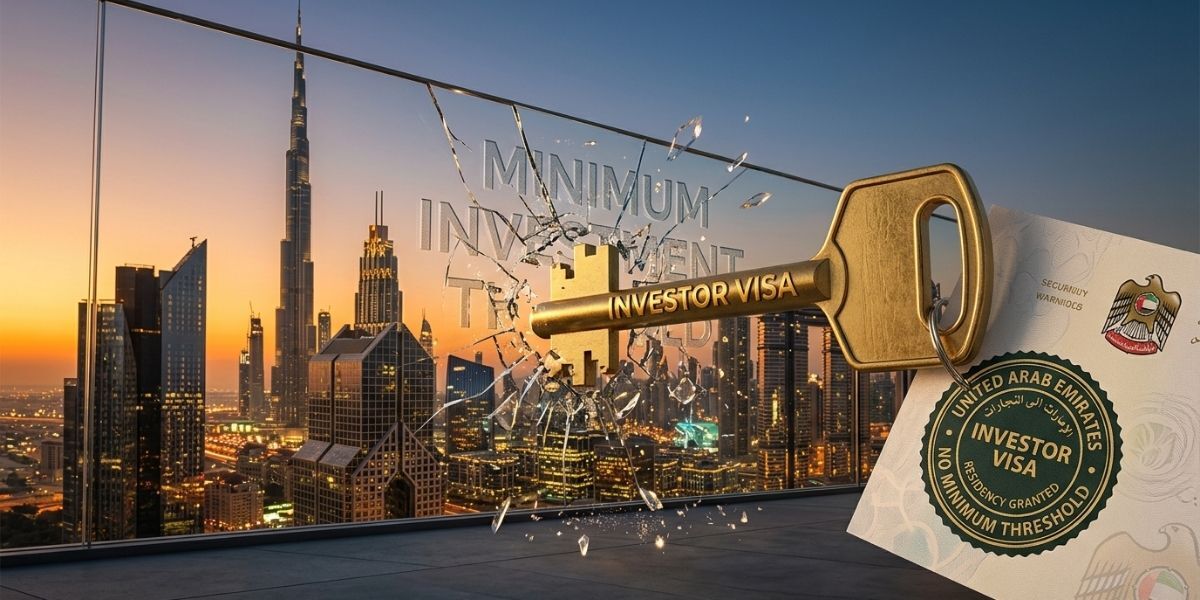
Dubai authorities have significantly revised the regulations for obtaining residency through property investment. Investors applying for a two-year residence visa are no longer required to purchase real estate above a specific minimum value.
Previously, applicants seeking UAE residency through real estate investment had to acquire a property worth at least AED 750,000 (approximately USD 204,000). For many years, this threshold served as the primary entry point for obtaining residency through the UAE property market.
However, starting from April 2026, the requirement has been officially abolished for individual property owners. According to specialists at Atton Accounting & Consulting, these changes represent one of the most substantial relaxations of Dubai’s investor visa regulations in recent years.
What Has Changed Under the New Rules?
The key change is that property value is no longer the determining factor for obtaining a two-year investor residence visa.
The new framework includes:
- No minimum property value requirement for sole property owners;
- Eligibility for residency based on ownership of any completed property;
- A focus on ownership status rather than the amount invested.
In practical terms, the model has changed as follows:
Previously:
→ Residence Visa = Property Worth Over USD 200,000
Now:
→ Residence Visa = Any Property + Registered Ownership Title
As a result, a much broader range of real estate assets now falls within the scope of the program, including:
- Affordable apartments;
- Small studio units;
- Properties within the mass-market segment.
Which Requirements Still Remain in Force?
Despite the significant relaxation of investor visa conditions, the system remains regulated. The removal of the minimum property value threshold does not mean a complete elimination of eligibility requirements — the authorities have retained a number of conditions related to the property type, ownership structure, and financial transparency of the transaction.
The core principle of the new framework is that the key factor for obtaining residency is no longer the size of the investment, but the existence of a legally registered ownership right to property in Dubai. However, both the property and the investor must still comply with the established eligibility criteria.
The Property Must Be Completed and Commissioned
Only completed and commissioned properties qualify under the program. This means the investor must purchase a property with an officially issued Title Deed. Off-plan properties that are still under construction and do not yet have registered ownership documentation do not qualify for a two-year investor residence visa.
In this way, the authorities continue to link the residency program to actual ownership of a tangible asset rather than to future investment commitments.
Separate Rules Apply to Joint Ownership
If the property is registered under multiple owners, a minimum threshold still applies. Each co-owner must hold a share valued at no less than AED 400,000 (approximately USD 109,000). This requirement remains in force even after the removal of the general minimum threshold for sole property owners. The approach is intended to prevent artificial subdivision of property ownership solely for residency eligibility purposes.
Requirements for Mortgaged Properties
When purchasing property through a mortgage, investors must comply with additional requirements imposed by both the bank and immigration authorities.
Typically, the following conditions apply:
- Proof of partial payment of the property value;
- A bank-issued NOC (No Objection Certificate);
- Compliance with the lender’s minimum paid-up equity requirements.
In other words, eligibility for residency through mortgaged property remains available, but the property must demonstrate sufficient paid equity.
Documentary Evidence Remains Mandatory
Despite the program's simplification, the application process still requires a complete set of documents and official proof of ownership.
Investors are generally required to provide:
- A valid passport;
- Title Deed;
- A passport-sized photograph;
- Emirates ID (if already issued);
- Additional banking documents in the case of a mortgage-financed property.
As a result, while the new framework has become significantly more accessible in terms of entry cost, the legal and registration procedures remain strictly regulated.
How Will This Impact the Real Estate Market?
In practice, the updated regulations significantly expand the pool of potential investors. Previously, residency through property investment was primarily viewed as an investment-oriented product aimed at buyers in the mid- to high-end real estate segments. Now, however, residence visas are becoming a far more accessible tool for obtaining UAE residency status.
This shift may lead to several market consequences, including:
- An increase in the number of property transactions;
- Higher demand within the lower and mid-price segments;
- Improved liquidity across residential assets;
- An inflow of new foreign buyers.
The most noticeable impact is expected in the affordable housing segment. Lowering the financial entry threshold automatically broadens demand for smaller apartments and studio units, potentially driving prices upward, specifically within the budget property category.
In addition, the overall structure of demand is likely to change. A portion of buyers may now purchase property not primarily for investment returns, but rather for the purpose of securing residency status in the UAE.
Why Dubai Authorities Introduced This Change
The primary objective of the reform is to stimulate activity in the real estate market and expand the resident base.
By easing the eligibility requirements, the authorities aim to:
- Attract a larger number of foreign investors;
- Support real estate sales volumes;
- Increase overall market activity;
- Strengthen the connection between migration policy and the property sector.
This is particularly important for Dubai, as the real estate market remains one of the emirate’s key mechanisms for attracting foreign capital and new residents.
How the Residency-by-Property System Is Structured Now
Following the regulatory update, the system has effectively been divided into two tiers.
2-Year Investor Residence Visa
Available to owners of any completed property, regardless of the property’s value.
Key features include:
- Validity period of 2 years;
- Option for renewal;
- The ability to sponsor residence visas for a spouse and children.
10-Year Golden Visa
The requirements for the long-term Golden Visa remain unchanged. To qualify, investors must still own property valued at AED 2 million or more.
As a result, Dubai continues to maintain a distinction between basic access to residency and long-term residency programs designed for larger-scale investors.
What Investors Should Keep in Mind
Although access to the system has become significantly easier, the nature of the residency status itself remains unchanged.
Investors should take the following into consideration:
- The investor residence visa remains a short-term residency permit;
- Residency status requires periodic renewal;
- The program does not provide an automatic pathway to UAE citizenship;
- Long-term residency benefits are still primarily linked to larger-scale investments.
In other words, the authorities have lowered the financial entry barrier, but the overall value and structure of the UAE residency status remain fundamentally the same.
How to Apply for an Investor Residence Visa in Dubai
Applications for a two-year investor residence visa can be submitted through the official services of the Dubai Land Department (DLD), including the digital DLD Cube platform. Most procedures related to ownership verification and residency processing are carried out through this system.
Despite the relaxation of property value requirements, the application process itself remains multi-stage and requires confirmation of ownership status, compliance checks, and preparation of a complete set of supporting documents.
In most cases, the process takes anywhere from several days to several weeks, depending on the type of property, ownership structure, and whether the property is mortgage-financed.
1. Eligibility Verification
At the initial stage, it is necessary to confirm that the property meets the program’s eligibility requirements.
To qualify for the visa, the following conditions must generally be satisfied:
- The property must be located within Dubai;
- The property must be completed and officially commissioned;
- Ownership rights must be formally registered;
- The applicant must hold a valid Title Deed;
- All mortgage or joint ownership requirements must be met.
If the property is registered under multiple owners, each investor’s minimum ownership share must be confirmed. In the case of a mortgaged property, the authorities will additionally verify the amount already paid and the bank’s approval status.
In practice, the property verification stage is one of the most important parts of the process, as not every property automatically qualifies under the residency program.
2. Preparation of Required Documents
Once eligibility requirements have been confirmed, the investor must prepare the document package for the application process.
The standard list of documents typically includes:
- A copy of the passport;
- The Title Deed;
- A recent color photograph;
- Emirates ID (if previously issued);
- A bank-issued NOC in the case of a mortgage;
- Additional documents requested by immigration authorities.
In certain cases, applicants may also be required to provide proof of marital status, residential address, or financial information, particularly if the investor intends to sponsor residence visas for family members.
It is important to ensure that all documents are valid and properly prepared, as any inaccuracies or inconsistencies may delay the application review process.
3. Application Submission and Government Fees
After the documents have been prepared, the application is submitted through the Dubai Land Department platform or authorized service centers.
At this stage, the investor typically:
- Uploads the required documents;
- Pays the applicable government fees;
- Undergoes an initial verification process;
- Receives further instructions regarding Emirates ID processing.
The amount of government fees depends on the type of application and any additional services requested, although the overall process remains fully regulated by government authorities.
Following submission, the official application review process begins.
4. Medical Examination and Biometrics
To obtain a residence visa, applicants must complete a mandatory medical examination at an accredited medical center in the UAE.
The examination generally includes a standard health screening in accordance with the country’s immigration requirements.
Afterward, the applicant undergoes biometric registration to obtain the Emirates ID. This stage includes the collection of:
- Fingerprints;
- A biometric photograph;
- Identification data for the UAE’s government identity system.
The Emirates ID serves as the primary domestic identification document for UAE residents and is used in most government, banking, and administrative procedures.
5. Issuance of the Residence Visa
Once all checks and procedures have been completed, the investor is granted a two-year residence visa with the possibility of renewal.
Resident status allows the holder to:
- Legally reside in the UAE;
- Open bank accounts;
- Obtain a UAE driver’s license;
- Rent residential property;
- Connect utility services;
- Sponsor residence visas for a spouse and children.
At the same time, it is important to understand that the investor visa remains a residency status rather than a pathway to citizenship. To maintain residency eligibility, the investor must continue to satisfy the program requirements and retain ownership of the qualifying property.
Conclusion
Dubai is clearly focusing on expanding the real estate market and increasing the number of residents not by tightening regulations, but by removing barriers to entry.
As a result, even budget-segment properties can now serve as a basis for obtaining UAE residency, making the market substantially more accessible to international buyers.
Experts at Atton Accounting & Consulting note that these changes may significantly reshape demand within Dubai’s real estate sector. The lower entry threshold is expected to increase interest in lower- and mid-priced properties, where real estate purchases are increasingly viewed not as pure investments, but as a practical route to obtaining UAE residency status.
At the same time, the system remains primarily residency-oriented rather than immigration-focused. The program does not create a pathway to citizenship or permanent immigration status. From a strategic perspective, however, the reform further strengthens Dubai’s position as a flexible international jurisdiction offering simplified access to residency through the real estate market.


