Industrial Areas – Best Place for Manufacturing Businesses in the UAE
Introduction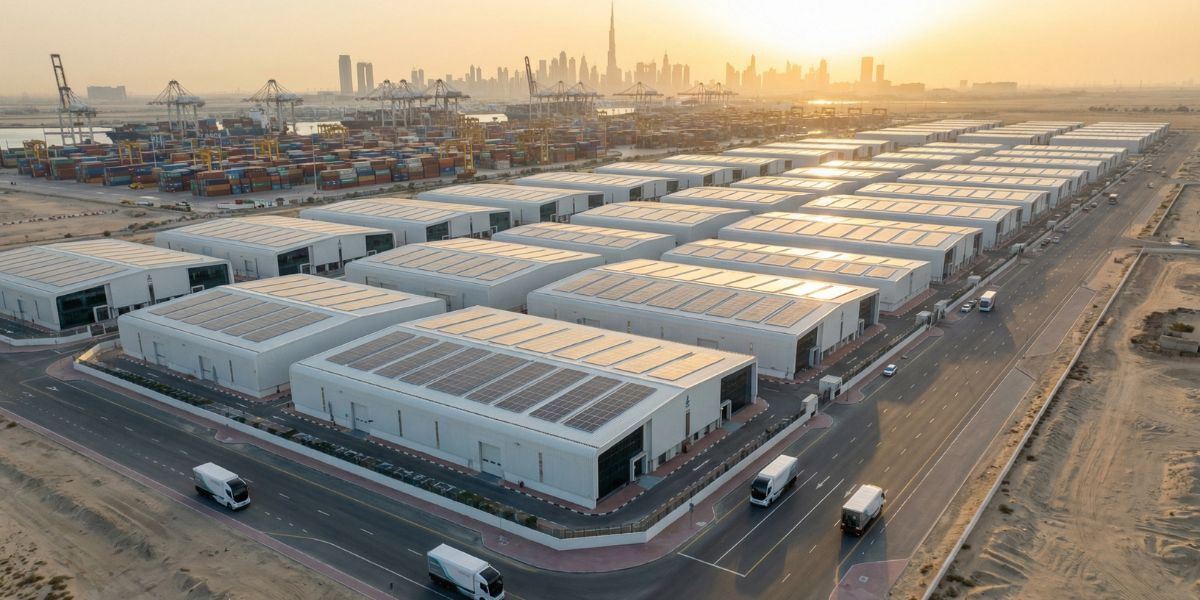
Due to its policy aimed at attracting foreign investors, the United Arab Emirates (UAE) has grown into a global hub for international trade, manufacturing, and logistics in just a few decades. It has established a network of strategically important industrial parks in all the Emirates. These are the dedicated areas (free zones) with the latest infrastructure, friendly investment regulations, and accessibility to important regional and global markets. Whether located in sprawling KIZAD (Khalifa Industrial Zone Abu Dhabi) or dynamic Dubai Industrial City, each park acts as a catalyst for economic expansion and diversification in a region that is working to create avenues for economic growth.
In the article, we will discuss some of the benefits of setting up your operations in industrial parks in the UAE and how they can provide a competitive advantage for you to have sustained success with your manufacturing businesses, not only within the Middle East but also beyond.
Factors and value proposition of the UAE industrial parks
Industrial parks and zones in the UAE offer a range of amenities to support businesses, with a focus on manufacturing, logistics, and related sectors. One of the main benefits is their location close to major ports/airports, state-of-the-art infrastructure with world-class amenities, tax and customs privileges, 100% foreign ownership, and a favorable business environment. The availability of laboratories, fabrication spaces, conference rooms, and other infrastructure in these parks also facilitates collaboration and innovation, as companies, research institutions, and government agencies have the space to interact.
Strategic Locations and Infrastructure
The overwhelming majority of industrial parks located around major ports, such as Jebel Ali, Dubai International Airport, and Al Maktoum International Airport, facilitate the import and export of goods with minimal to no inspection. These parks offer a range of modern facilities, including warehouses, plants & offices, and logistics facilities, complete with contemporary technology and communication services. Also, they provide top-quality power control, water supply, and waste disposal services.
Financial Incentives and Business Support
Enterprises in industrial zones are usually provided with certain tax incentives, such as corporate and individual tax exemptions (if QFZP conditions are met) and no customs duties. Foreigners can own 100% of their companies and repatriate 100% of profits or capital. Support services, including visa and business licensing, as well as administrative support, are also provided.
Fostering Innovation and Collaboration
These consist of groupings by companies, research, and universities, organized into clusters or parks with industrial consortia, the search for innovation, and the transfer of knowledge. Such measures help stimulate production, logistics, and technology in the region. In addition, some districts offer services for entrepreneurs and startups, such as incubation/acceleration.
Besides, the UAE offers simple and straightforward visa requirements, a reliable banking system, and a safe and friendly living environment. Thanks to these and other advantages, the country has earned a reputation as one of the most popular investment regions in the world.
And now let’s consider the specific free zones in the UAE that provide ecosystems for manufacturing businesses.
Abu Dhabi Industrial Park
The Abu Dhabi Industrial Park is the term used to encompass the various strategic zones and clusters created throughout the Emirate of Abu Dhabi, targeting general manufacturing, logistics, and heavy industries. It's more of a term for the vast open areas, such as
- Khalifa Industrial Zone, Abu Dhabi (KIZAD);
- Industrial City of Abu Dhabi (ICAD);
- Industrial park of ZonesCorp (Al Ain Industrial City and Al Fayah).
Each of them is strategically positioned and supported by strong infrastructure, including access to seaports (such as Khalifa Port) and highways linking them to regional and global trade routes.
KIZAD is well-positioned for international markets; it’s located near Khalifa Port, a state-of-the-art deepwater port offering direct access to international shipping lanes. With access to the cities of Abu Dhabi and Dubai, as well as the Saudi Arabian border, it provides an easy way to the GCC market and the international regulatory environment.
Abu Dhabi Industrial Zones are cluster-specific zones aimed at the following industries:
- Metal and steel;
- Petrochemicals;
- Automotive;
- Food & beverages;
- Logistics & packaging.
Here, investors gain access to specialized suppliers, a skilled workforce, and a wide range of services.
However, local industrial parks and developments are more than just places to put plants, factories, and warehouses; they are mixed-use economic centers that provide the resources, infrastructure, and support businesses need to be commercially successful. So, if you are manufacturing worldwide, a logistics service provider, or a local SME, establishing a company here will enable you to achieve cost savings, operational efficiencies, and growth well into the future at the heart of MENA.
Dubai Industrial Parks
Not only the areas for plants (or factories or warehouses), but also local parks and developments that serve as economic centers, helping businesses succeed, because providing the resources necessary for success is their primary goal. So, whether you are a global manufacturer, logistics service provider, or local SME, setting up here can help deliver long-term cost savings, improved operations, and scalable growth in the heart of MENA.
Here are the most popular Dubai industrial parks:
- Dubai Industrial City (DIC), which sits adjacent to Jebel Ali Port and Al Maktoum International Airport, covers an area of 55 square kilometers in the Emirate of Dubai. It specializes in manufacturing, logistics, food & beverage, metals, chemicals, and construction materials. Foreign investors are provided with ready warehouses, plots, and logistics facilities, as well as convenient access to major highways, integrated with Dubai’s Logistics Corridor.
- Jebel Ali Industrial Area in Jebel Ali Free Zone (JAFZA) is a free zone industrial land proposed for manufacturing, logistics, warehousing & workshops. The benefits of this area include easy access to JAFZA and Jebel Ali Port, making it ideal for entrepreneurs and export-oriented businesses that rely heavily on international shipping lines.
- Al Quoz Industrial Areas – Zones 1 to 4, in the heart of Dubai city, are centered beside Al Serkal Avenue to the north and specialize in industrial and factory space, self-storage warehouses, auto stores, and manufacturing units. Al Quoz Industrial Areas, located near the heart of Dubai, are ideal for small workshops and B2B services.
- Eastern Dubai Ras Al Khor Industrial Area – the jurisdiction dedicated to light industry and small companies, car mechanics, and construction material producers.
Our management team will assist you in selecting the best site and setting up your manufacturing business in these areas or any other in the UAE.
Ras Al Khaimah Industrial Zone
Ras Al Khaimah Industrial Zone is a complex of industrial zones (parks) and the business park Al Hamra, in the free zone of Ras Al Khaimah (Ras Al Khaimah Economic Zone – RAKEZ), the area aimed at international and local industrial companies and entrepreneurs. These zones are intended to attract foreign investors, promote economic diversification, and support industrial growth in the region.
RAKEZ is the largest operator of industrial free zones in the region, which operates various specialized industrial and business parks throughout the emirate.
With its state-of-the-art facilities and innovative incentive packages for manufacturers and industrial investors, the Ras Al Khaimah Industrial Zones offer a viable option for those seeking affordable, scalable, and strategically located space for their manufacturing and industrial ventures in the UAE. RAK, with its customized infrastructure, robust logistics access, and investor-friendly laws, has emerged as a growing industrial hotspot for companies across various industries.
Warehousing in the UAE
The UAE is a regional and global logistics hub, providing world-class storage facilities that support international trade, e-commerce, manufacturing, and supply chain activities. Investors have mainland options and free zone options. Based on your business, it could be a type of goods you are importing/exporting.
Local firms relying upon warehousing needs have the following types of warehousing:
- General Storage: Consumer goods, industrial supplies;
- Bonded Warehousing: Duty-free storage for import/export;
- Open Yard Storage: Bulk items, construction materials, vehicles;
- Fulfillment Centers: E-commerce and last-mile delivery;
- Cold Storage: For food & pharma Temp Control Process applications.
The List of Industrial Parks in the UAE
There are many free zones in the UAE, and many of them have industrial parks. Like other similar jurisdictions, these zones offer benefits to foreign investors, including tax exemptions and streamlined business transactions. Here's a more detailed breakdown of industrial parks in the UAE (in each of the emirates):
Abu Dhabi
- KIZAD (Khalifa Industrial Zone Abu Dhabi) is a large industrial zone in the region, adjacent to Khalifa Port.
- Industrial City of Abu Dhabi, ICAD (Industrial City of Abu Dhabi) – consists of ICAD I (heavy manufacturing), ICAD II (light & medium industries), ICAD III (engineering & hi-tech sectors).
- Mussafah Industrial Area is a well-developed industrial zone for multiple industries.
- ZonesCorp Industrial Zones is operated by the AD Ports Group: Al Ain Industrial City, Al Fayah Industrial Zone, and Al Khazna Industrial Zone.
- Tawazun Industrial Park is intended for the defense, security, and automotive sectors.
Dubai
- Dubai Industrial City (DIC) specializes in manufacturing, logistics, F&B, and trade.
- Dubai Investments Park (DIP) is a combination of industrial, commercial, and residential zones.
- Dubai Silicon Oasis (DSO), with the emphasis on electronics, tech, and light industrial manufacturing.
- Al Quoz Industrial Areas is a high-demand location in central Dubai with a great balance of price and capability.
- Ras Al Khor Industrial Park is among the oldest and most most well-known industrial areas, home to small factories and workshops.
- Jebel Ali Industrial Area in Jebel Ali Free Zone (JAFZA) is a perfect option for international logistics and exports.
Sharjah
- Sharjah Industrial Areas 1-18: One of the oldest and most diversified industrial hubs in the UAE.
- Sharjah Airport International Free Zone (SAIF Zone) is focused on light and heavy industries.
- Hamriyah Free Zone (HFZ). This jurisdiction is aimed at petrochemicals, steel, marine, and other industries.
- Al Sajaa Industrial Oasis (ASIO) offers big land plots for manufacturing premises.
Ajman
- Ajman Industrial Area is not a free zone, but a dedicated industrial area. It works with many ongoing developments in Ajman City.
- Ajman Free Zone (AFZ) is home to light industries, small and medium enterprises, and logistics.
Umm Al Quwain
- Umm Al Quwain Industrial Area – a light industrial area with small manufacturing factories.
- UAQ Free Trade Zone is a budget-oriented zone for small industrialists & business owners.
Ras Al Khaimah
- RAK Maritime City – perfect for maritime and port-related businesses.
- RAK Industrial Area – Old-School Industrial Center.
- Al Ghail Industrial Park – a RAKIA-operated area with a focus on heavy and light industries.
- RAK Economic Zone (RAKEZ) is one of Ras Al Khaimah's free zones and also offers non-free zone options; it comprises Al Hamra Industrial Zone and Al Hulaila Industrial Zone.
Fujairah
- Fujairah Free Zone – located near the port and offers robust logistics support.
- FAR – Fujairah Industrial Area, with an emphasis on traditional manufacturers and traders.
- Creative City Fujairah - Services (media, light industry), and small-scale trade.
Some industrial areas are located within free zones (with tax and customs breaks and the like), and others are mainland zones. Restrictions on license types and ownership will largely depend on the specific mainland, free zone, or offshore jurisdiction.
Conclusion
Industrial and manufacturing zones in the UAE are now key drivers of diversification, innovation, and integration into global trade. Located strategically from the capital city’s high-capacity KIZAD to one of Dubai’s most exciting destinations, Industrial City, and Hamriyah Free Zone in Sharjah, and to cost-efficient RAKEZ in RAK, these are the few free zones with world-class infrastructure that offer businesses a competitive advantage through seamless regulatory services and access to regional & international markets.
Covering heavy industry, logistics, food processing, electronics, and automotive industries, among others, these zones are ideal for startups, SMEs, and multinational manufacturers. The benefits of 100% foreign ownership in free zones, favorable tax regimes, sector-specific clusters, and integrated logistics support make the UAE a destination for leading industrial growth in the Middle East.
For businesses seeking growth, efficiency, and strategic expansion, the UAE’s industrial and manufacturing zones offer not only operational advantages but also a stable, future-ready platform for long-term success.
Our team of experts is ready to help you establish your manufacturing in one of these areas. We will assist you from the very beginning, with choosing the optimal jurisdiction for registration, to obtaining the necessary legal documents, licenses, and visas, and even after that, with any accounting and taxation issues.
Frequently Asked Questions (FAQs):
What is the difference between industrial free zones and mainland industrial areas in the UAE?
The main distinction between industrial free zones and mainland industrial areas lies in ownership regulations, regulatory practices, and customs treatment. Free zones permit 100% foreign ownership, free remittance of profits, and corporate tax incentives, subject to certain requirements. The mainland industrial areas could require adherence to federal licensing regulations and, in some cases, local partners, but will permit free trade within the UAE market. Free zones are typically geared more toward export, while those on the mainland work best for companies looking to reach a UAE audience. Which is right depends on how you sell your goods and manage your supply chain.
Which UAE emirate is best for manufacturing businesses?
There is no one “best” emirate, as it will largely depend on your industry, budget, and logistics requirements. Abu Dhabi (with zones such as Khalifa Industrial Zone Abu Dhabi) is well-suited to heavy industry and petrochemical or large-scale manufacturers requiring port access/layout available land. Dubai has well-established logistics networks and access to global markets, which appeals to light manufacturing and trade-oriented companies. Sharjah and Ras Al Khaimah are popular for budget-friendly startups, especially SMEs. There are different strokes for different folks in each emirate, and you must compare to find what works well for you.
Can foreign investors fully own manufacturing companies in the UAE industrial zones?
Yes, foreign investors are permitted to own 100% of manufacturing companies operating in the majority of the UAE's industrial free zones. Free Zones, including Ras Al Khaimah Economic Zone and Dubai Industrial City, offer 100% foreign ownership without the requirement for a local sponsor. This arrangement is particularly appealing to offshore OEMs seeking full control. Recent reforms in mainland industrial areas have also brought full foreign ownership to many activities, pending approval. Nonetheless, ownership restrictions continue to differ by activity and emirate, so appropriate professional advice is essential.
Which industries are best suited to UAE industrial parks?
UAE Industrial Parks: UAE industrial parks cater to a variety of industries, including heavy and medium industries, light industries, and logistics. Metals, petrochemicals, and automotive are typical heavy industries; such companies are registered in the Abu Dhabi and Sharjah zones. Light manufacturing, food and beverage processing, electronics, and packaging are common in Dubai and the northern emirates. Many parks are industrial estates, which allow companies to access common suppliers, skilled labour, and specialized infrastructure tailored to the park's purpose. This type of clustering represents a quantum jump in productivity and thus cuts costs even further.
How long does it take to set up a manufacturing business in an industrial zone?
Establishing a UAE industrial manufacturing operation can take 4-8 weeks in a free zone (incorporation and Free Zone entity setup can be completed within three days of submitting your documentation to Company Registration) - this depends on how quickly the government departments process the documents and how long procurement takes. This involves registering the company, obtaining licenses, leasing land or property, and applying for visas. Fast-track licenses are permitted in some zones for normal production activities, but not without environmental or technical approvals. Bigger or specialized industrial projects may experience a longer wait time for custom infrastructure and regulatory checks. Good planning and thorough documentation can significantly reduce this setup time.
Do industrial zones in the UAE support logistics and warehousing?
Yes, logistics and warehousing are part of most industrial zones in the UAE. They are close to large ports, airports, and highways for quick in-port & outport as well as delivery. Bonded warehouses, cold storage, fulfillment centers, and open yards are also available for businesses to use. This comprehensive logistics system backs up our manufacturing, e-business, and regional distribution. In return, companies enjoy faster transit times and lower costs, along with greater supply chain reliability.


